The UK Build to Rent Market in 2026: The Numbers That Matter
The UK's Build to Rent sector reached a milestone in 2026: a total pipeline of more than 300,000 homes for the first time, with record capital flowing into operational buildings. But underneath the headline growth sits a sharp slowdown in new construction that will shape the sector for years. Here are the numbers that matter — and what they mean.
Quick answer: As of Q1 2026 the UK has 147,670 completed Build to Rent homes (up 13% in a year), around 47,000 under construction and a record total pipeline of 302,994 (British Property Federation/Savills). Investment hit a record £5.3bn in 2025 (Savills), and roughly £3bn more transacted in the first half of 2026 — but new construction starts collapsed 65% year on year, largely due to Building Safety Act approval delays.
Supply: A Record Pipeline, But Starts Have Stalled
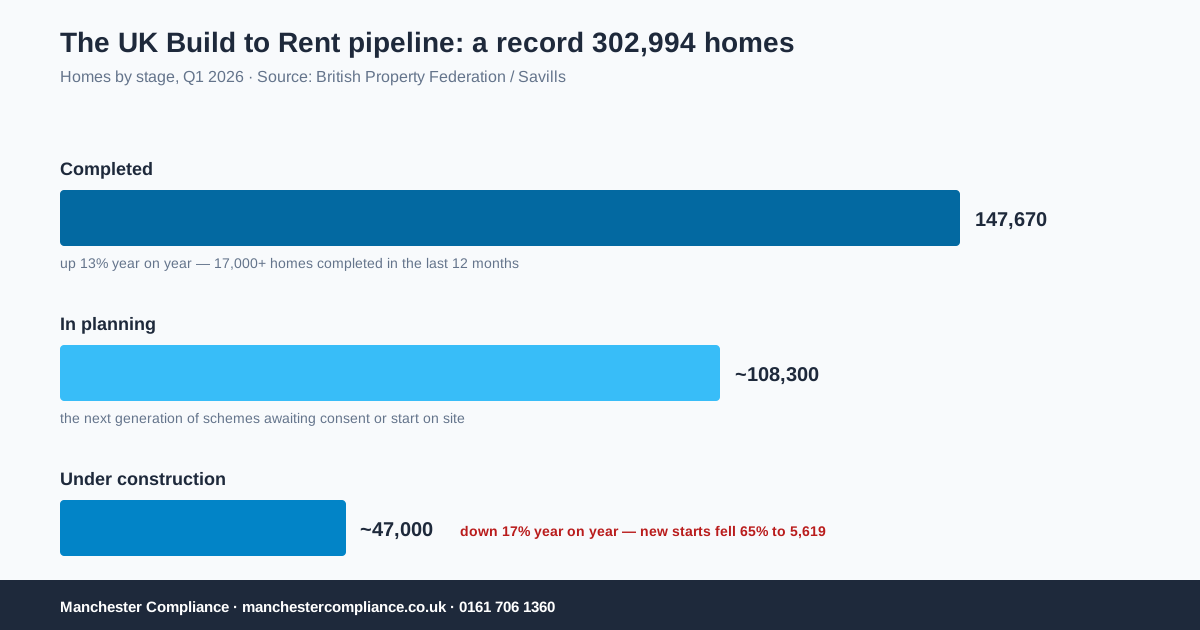
The UK BTR pipeline by stage, Q1 2026 (BPF/Savills)
The British Property Federation's Q1 2026 figures, compiled with Savills, show a sector that has grown relentlessly on delivery:
- 147,670 completed BTR homes across the UK — up around 13% in a year, with more than 17,000 homes completed in the last 12 months alone
- A record total pipeline of 302,994 homes across all stages
- BTR now accounts for roughly 8% of all new homes delivered in Great Britain in 2025
- Homes under construction fell 17% year on year to around 47,000
- New starts collapsed 65% — just 5,619 homes started in the year to Q1 2026, against more than 16,000 the year before
- London starts fell from over 3,100 to barely 1,000; regional starts fell from nearly 13,000 to about 4,600
What that means in practice: the sector's centre of gravity is shifting from building new towers to operating existing ones — and the buildings already standing are becoming more valuable, better traded and more intensively managed.
Investment: Records Being Broken
While construction slowed, capital accelerated:
- 2025 was a record year, with £5.3bn invested in UK BTR (Savills)
- Q2 2026 was the strongest second quarter on record at £2.2bn, taking the first half of 2026 to around £3bn — ahead of where 2023, 2024 and 2025 stood even at the end of Q3
- The standout deal: Morgan Stanley Real Estate Investing and Ridgeback acquired L&Q's private rental portfolio for over £1.045bn — around 3,200 homes and the largest operational BTR acquisition on record
- Greystar's ~£500m purchase of 904 homes at Elephant Park underlined the same theme
Rents: The Boom Has Cooled
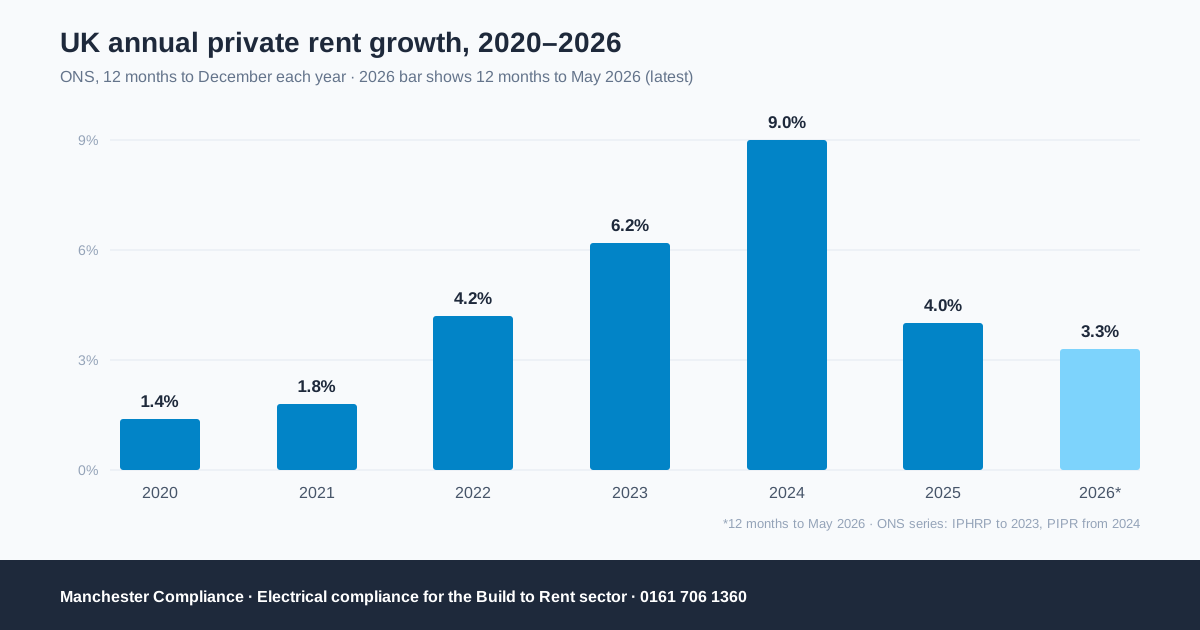
UK annual private rent growth (ONS) — from post-pandemic surge to normalisation
The Office for National Statistics rent series tells the story of an extraordinary cycle:
- 2020–2021: modest growth of 1.4% and 1.8% as the pandemic suppressed city rents
- 2022–2023: acceleration to 4.2% and then 6.2% as demand surged back and supply tightened
- 2024: the peak — 9.0% annual growth, the fastest on record, with average UK rents passing £1,300 a month
- 2025: cooling to 4.0%, with the average UK rent at £1,368 by December
- 2026 so far: 3.3% in the 12 months to May — the slowest in around four years
For BTR operators, slower rent growth changes the game: income growth now has to come from occupancy, retention and operational quality rather than market-wide rent inflation.
Single-Family Rental: The Sector's Growth Engine
The fastest-moving part of BTR is no longer city-centre towers — it's houses:
- Around 26,400 single-family rental homes are now operational in the UK, roughly triple the number six years ago (Knight Frank)
- SFR attracted a record £2.6bn of investment in 2025 — 55% of all BTR investment, overtaking multifamily for the first time
- Housebuilders sold around £3.17bn of homes to rental investors in 2025 (Savills), and half expect single-family investors to take more than 15% of their sales through 2030
- Completed single-family rental stock is concentrated most heavily in the North West — with Manchester-based Ascend managing the largest share of the national portfolio
What It All Means
Put the numbers together and a clear picture emerges: the UK BTR sector has entered its operational era. A record 147,670 homes are open and housing residents. Record capital is buying stabilised, income-producing buildings. New construction has slowed sharply. And rent growth has normalised, putting the pressure on operations.
For the sector's supply chain — including compliance specialists like us — that shift matters. Buildings completed in the 2019–2021 wave are hitting their first five-year electrical inspection cycles. Emergency lighting systems installed at completion are reaching battery replacement age. Institutional owners paying premium prices for operational assets expect immaculate compliance records as part of the deal.
Manchester Compliance delivers electrical compliance programmes for Build to Rent operators across Greater Manchester — see how we work with BTR portfolios.
Frequently Asked Questions
How many Build to Rent homes are there in the UK in 2026?
147,670 completed BTR homes as of Q1 2026, according to the British Property Federation and Savills — up around 13% in a year. Including homes under construction and in planning, the total pipeline stands at a record 302,994.
How much is invested in UK Build to Rent?
2025 set a record with £5.3bn invested (Savills), and the first half of 2026 added roughly £3bn more — including the largest operational BTR deal on record, the £1bn-plus acquisition of L&Q's rental portfolio. Most recent capital has targeted operational buildings rather than new development.
Why have Build to Rent construction starts fallen?
Starts fell 65% in the year to Q1 2026, driven mainly by Building Safety Act gateway approval delays for high-rise schemes, alongside build cost inflation and viability pressure. Under-construction volumes are at their lowest level in years.
Are UK rents still rising in 2026?
Yes, but much more slowly. Annual growth peaked at 9.0% in 2024 (ONS), cooled to 4.0% in 2025 and stands at 3.3% in the 12 months to May 2026 — the slowest in about four years. The average UK private rent is around £1,368 a month.
What is single-family Build to Rent?
Purpose-built rental houses (rather than apartment blocks), typically on suburban developments. It's the sector's fastest-growing segment — around 26,400 operational homes, triple the level of six years ago, attracting a record £2.6bn of investment in 2025 and overtaking multifamily investment for the first time.